


Acronis has outlined its view of how frontier artificial intelligence is reshaping cyber threats, arguing that the technology is increasing the speed and scale of attacks.
The cybersecurity vendor said advanced AI models are helping threat actors produce phishing campaigns, malware, vulnerability research, and social engineering with less effort, while also giving security teams new tools for threat analysis and incident response.
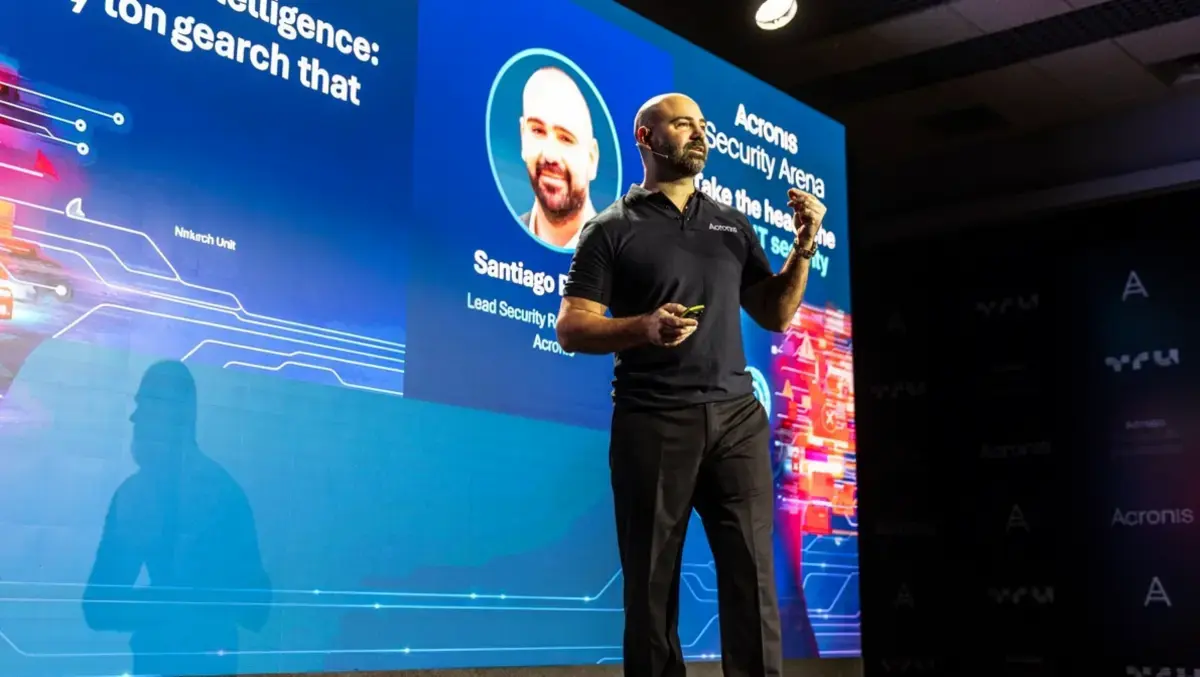
Santiago Pontiroli, Threat Intelligence Research Lead at the Acronis Threat Research Unit, said the main shift is that AI acts as an accelerator rather than a wholly new class of risk. That assessment puts the emphasis on existing security controls rather than any single model or developer.
Acronis said its research unit tracks how attackers adopt AI and studies the techniques that emerge as a result. Rather than focusing on one AI vendor, it looks at the behaviours and methods newer models may enable or improve.
The warning comes as companies across sectors experiment with generative AI tools in customer service, software development, data analysis, and internal operations. That broader adoption has raised concern among security teams about how the same systems could be used to automate parts of an attack chain.
Defence approach
Acronis said its response relies on a defence-in-depth model, including threat intelligence, malware research, behavioural analysis, endpoint detection and response tools, backup and recovery, email security, and staff awareness measures.
The company argued that this layered structure matters because AI-driven threats still depend on familiar weaknesses inside organisations. These include poor identity controls, unpatched systems, exposed endpoints, weak staff awareness, and loose handling of sensitive data.
For businesses adopting AI in their own operations, Acronis recommended a conventional security agenda. It said identity and access management, vulnerability management, endpoint protection, employee awareness, and data governance should remain central.
The company also pointed to the need for clear internal rules on the use of AI systems, especially where employees may enter sensitive information into external tools. The issue has become more prominent as businesses weigh productivity gains against the risk of data leakage and misuse.
Attack patterns
Acronis said the barrier to entry for cybercrime is falling as AI tools become easier to use. In practice, that means people with less technical skill may be able to create more persuasive scam emails, support malware writing, or speed up reconnaissance work that once demanded greater expertise.
At the same time, defenders can use AI to automate repetitive tasks and support investigations. Security teams are already using machine learning and related techniques to sort alerts, identify anomalies, and improve the speed of triage.
The balance between those two trends is likely to shape how businesses judge the risk of AI adoption. For suppliers such as Acronis, that means presenting cybersecurity not as resistance to AI use, but as the framework that allows companies to use it safely.
Industry researchers have increasingly drawn a distinction between AI creating new threat categories and AI making established tactics cheaper and faster to execute. Acronis aligned itself with the latter view, arguing that the fundamentals of cyber defence remain largely unchanged even as attack volumes and sophistication rise.
That position also suggests that many boards may not need entirely new security doctrines to manage frontier AI. Instead, they may need stronger execution of existing controls, combined with better visibility into how staff and attackers are using AI tools.
Pontiroli said: "Frontier AI is best understood as an accelerator rather than a fundamentally new category of cyber threat. It enables attackers to work faster, automate more of their operations, and lower the technical barriers to conducting sophisticated attacks. For defenders, however, the same technology offers powerful opportunities to improve detection, automate investigations, and respond to threats more effectively. The outcome will depend on how successfully organizations combine AI innovation with proven cybersecurity fundamentals."