

AU manufacturing sector faces robotics investment shortfall
Tue, 1st Sep 2026
Australia risks being left behind in the global race to adopt artificial intelligence and robotics across manufacturing, unless governments and industry invest more heavily in the nation's industrial ecosystem.
Australian manufacturers are becoming more comfortable with AI as businesses move beyond experimentation and begin considering how the technology could deliver broader operational gains.
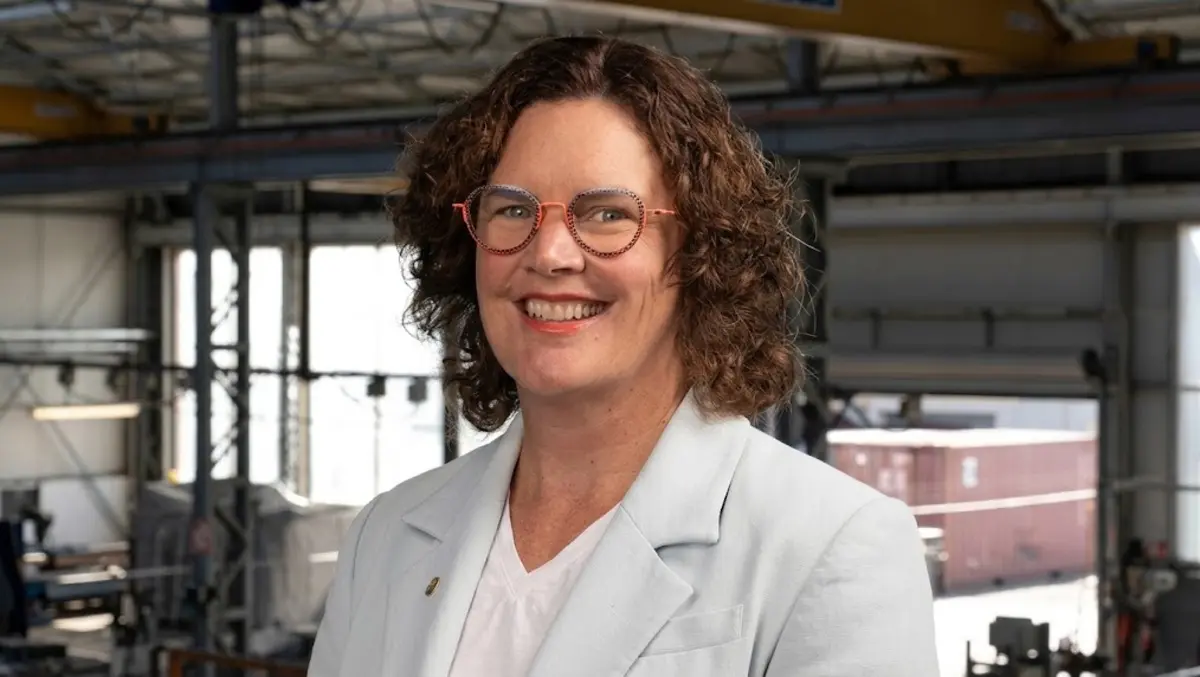
However, stakeholders in the industrial industry remain cautious in adopting emerging technologies, while lack of investment is simultaneously limiting the ability of manufacturers to modernise and compete internationally, according to Founder & CEO at ARM Hub, Cori Stewart.
"The biggest risk to digital transformation across the board, as well as for individual companies is doing nothing," Stewart said.
Manufacturing adoption of AI has historically been slower than in sectors such as financial services and eCommerce, but Stewart said companies in the sector are beginning to understand that the technology could have a much greater impact when data and systems are connected organisation-wide.
Rather than deploying isolated AI capabilities through existing software applications, manufacturers could potentially use AI across multiple parts of the business, including logistics, purchasing and production.
"You can move between those silos and get those rarefied benefits that you weren't able to do before," she said.
That shift is increasingly bringing IT and operational technology closer together, with manufacturers beginning to consider how enterprise AI capabilities can be applied directly to production environments.
Australian manufacturers are unlikely to rush into widespread adoption, in part because of the cyber security risks associated with connecting new technologies to industrial environments.
The sector has long been heavily exposed to threats, including ransomware, with cyber incidents capable of causing significant disruption to physical production systems.
Concerns around security should not become a reason for businesses to delay investment altogether, however.
"Manufacturers are now realising that they can manage that cybersecurity risk," Stewart said.
"There's heaps of opportunity to move within safe, secure and trusted systems, and reap the benefits that other sectors are getting quite readily."
Stewart also argued that early adoption can create benefits beyond the immediate return on investment from an individual AI or robotics project.
Businesses that begin experimenting with emerging technologies can build internal skills and prepare their workforces for a more automated operating environment.
Australia lagging behind in robotics adoption
The gap between Australia and other markets becomes even more pronounced when robotics adoption is analysed.
Stewart cited South Korea, China and other Asian economies as examples of markets where robotics has become much more deeply embedded in manufacturing.
"There's a huge difference (in robotics). It's a cultural difference," she said.
Countries with higher adoption rates tend to view robotics as a critical part of their future economic competitiveness, not simply a technology investment.
Some manufacturers in South Korea are already integrating humanoid robots into production environments alongside conventional industrial machinery and enterprise systems.
Australia, however, already possesses significant expertise in advanced robotics, particularly in sectors such as mining, field robotics, drones and defence.
Autonomous mining trucks and other complex robotic systems developed in Australia show that the nation has the technical capability to compete on the world stage.
The problem, though, has been translating that capability into broader manufacturing adoption.
"Because we haven't been big manufacturers in the past, that integration of our capability in robotics has not been a high point in our manufacturing sector," Stewart said.
If Australia is serious about rebuilding domestic manufacturing and developing more high-value industries, therefore placing less reliance on the natural resources sector, that will need to change.
Increased investment is required
Stewart's strongest criticism was directed at the level of investment available to Australian manufacturers.
Having observed multiple major international manufacturing markets over the past year, she said Australia was not providing companies with the same level of support available in competing economies.
"The biggest challenge is that Australian companies are so underfunded to do this work," Stewart said.
Governments in other major manufacturing economies provide substantial support to industrial businesses, including assistance with operating costs and technology adoption.
By contrast, Australian manufacturers - many of which are SMEs - often lack the financial resources required to invest in robotics, automation and other advanced technologies.
"Our companies are really starved of cash support," Stewart said.
"They're starved of investment, too - private and public investment - and they go hand in hand."
Stewart said the problem was particularly significant given that the Australian economy relies heavily on small and medium-sized businesses operating across complex supply chains.
Ambitious Australia falls short
Stewart offered a mixed assessment of the federal government's Ambitious Australia policy document.
While praising its attempt to simplify Australia's complicated innovation system, she argued that it failed to address a fundamental weakness in the country's economic model.
Australia has spent decades investing in research and development, particularly within universities, but has struggled to turn that research into commercially scaled industries.
"We're pretty good at innovating, but we're woeful at commercialising it," she said.
Increasing research investment alone will not solve that problem without simultaneously strengthening the industrial ecosystem capable of value-adding to new scientific discoveries and new technologies.
"Doing the same thing, more of the same thing, is only going to create the same thing," she said.
The focus should extend beyond generating intellectual property to creating domestic companies that can manufacture products, build supply chains and employ Australians in high-value jobs.
The ARM Hub is critical in this process as a place where the skills and capability to value-add to industries through manufacturing can be accessed.
"We don't just want to go from research and development, and you get IP, and then you the IP offshore," she said.
"You want to build the companies that then actually hire the people that generate great value."
Stewart insists, however, Australia still has the foundations required to become a stronger manufacturing nation.
ARM Hub works with around 60 companies at any one time and regularly sees Australian businesses developing highly sophisticated products and solving complex engineering problems.
Australian robotics companies are already producing world-class technologies in areas where the country has established expertise, while accelerator programs are helping local businesses access international markets and supply chains.
The challenge now is to scale those businesses and capabilities.