

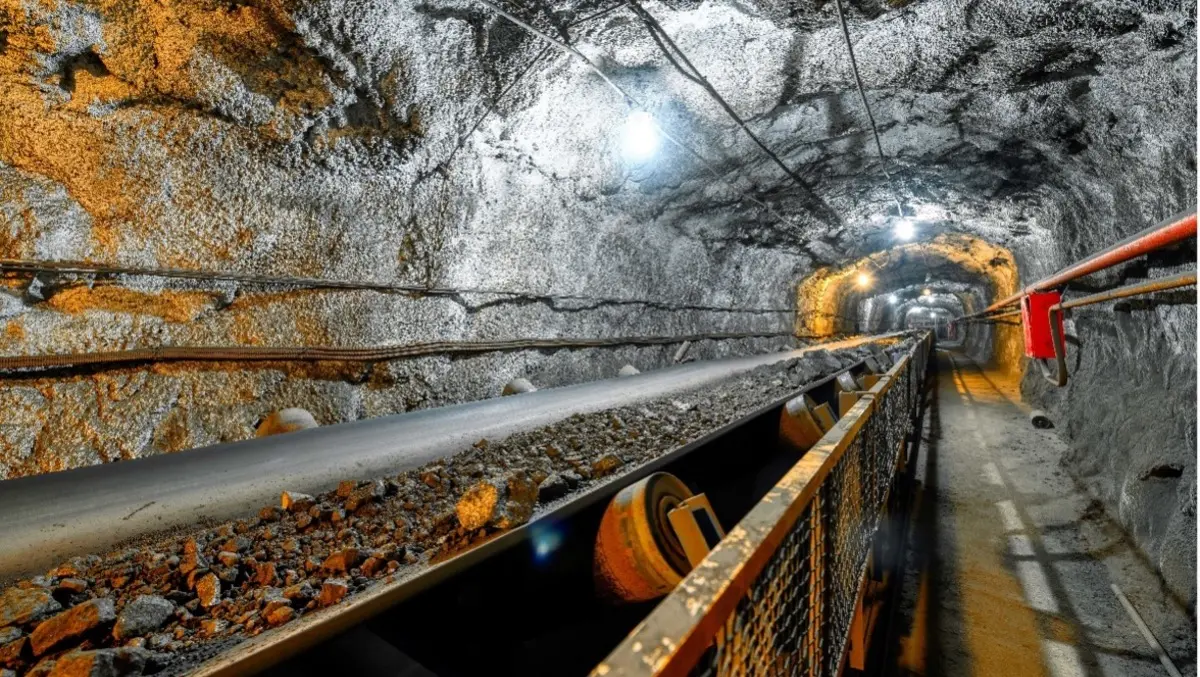
ContiTech launches Shield Survivor belt for Australian mines
Fri, 21st Aug 2026 (Today)
ContiTech has launched its Shield Survivor conveyor belt for underground hard-rock mining in Australia, targeting mines handling gold, copper, nickel and zinc.
The belt is designed for underground operations that must meet fire safety requirements while handling abrasive ore. It was developed to address the long-standing trade-off between flame resistance and durability in these environments.
Shield Survivor uses a flame-resistant cover compound certified to ASTM D378-13.2 and has a maximum DIN rotating abrasion value of 70 mm3. This combination is intended to help the belt withstand abrasive material while maintaining the fire performance required in underground hard-rock mining.
The launch focuses on one of the most maintenance-intensive parts of underground conveyor systems. In many mines, conveyor belts run continuously, and replacements can disrupt output and increase maintenance demands.
ContiTech said the new belt improves wear resistance over its earlier FR Tuff 2G cover compound, developed for similar applications. The company said this could help operators reduce belt replacements and plan maintenance more predictably.
The Australian launch gives ContiTech a product tailored to a mining market where underground operations often process highly abrasive ores under strict safety requirements. Hard-rock mines for gold, copper, nickel and zinc are a significant part of Australia's resources sector, and conveyor uptime can directly affect production schedules.
Safety and wear
Underground mining operators have long had to balance durability with flame-resistant standards, particularly in enclosed environments where fire risk is tightly managed. Belts that meet safety requirements do not always offer the longest service life in abrasive conditions, while tougher materials can create compliance challenges if they do not meet fire standards.
ContiTech is positioning Shield Survivor as a response to that issue, with the belt intended to support longer operating life without sacrificing flame-resistant performance.
Ben Wood, Head of Material Conveyance IAPAC at ContiTech, said the launch reflects pressure on mine operators to keep equipment available while maintaining underground safety.
"Mining operators are under constant pressure to maximise equipment availability while maintaining the highest safety standards underground. Conveyor belts are critical production assets, so extending belt life while maintaining fire performance can deliver significant operational value.
For our customers, this comes down to confidence: being able to keep production moving without compromising safety underground. Shield Survivor gives mine operators a way to protect their people and their output at the same time, and that balance is increasingly what the industry is asking of its suppliers."
The product sits within ContiTech's mining and resources portfolio, which covers industrial materials and systems used in heavy-duty applications. The division is part of Continental, the German industrial group best known for tyres but also active across a wider range of industrial markets.
Continental generated sales of €19.7 billion in 2025 and employs about 76,000 people across 54 countries and markets. Within the group, ContiTech has around 20,000 employees at more than 60 sites worldwide and reported sales of about €6.0 billion in 2025.
Australian market
Australia is an important market for mining equipment suppliers because of the scale of its metals sector and the technical demands of remote and underground operations. Suppliers that can show lower replacement rates or fewer maintenance interruptions may find a ready audience among operators seeking to keep production steady while managing site access and labour demands.
For conveyor belt suppliers, wear life is a key commercial factor because belts are consumable assets that must be replaced over time. Any increase in abrasion resistance can affect maintenance intervals, shutdown planning and the total cost of running underground materials handling systems.
Shield Survivor enters this market as a specialist product rather than a general-purpose belt. Its focus on underground hard-rock mining sets it apart from belts designed for surface operations or less abrasive materials, where performance priorities can differ.
Wood said underground mining operations increasingly need conveyor products that improve safety and operating efficiency at the same time.
"Mining operators are under constant pressure to maximise equipment availability while maintaining the highest safety standards underground. Conveyor belts are critical production assets, so extending belt life while maintaining fire performance can deliver significant operational value.
For our customers, this comes down to confidence: being able to keep production moving without compromising safety underground. Shield Survivor gives mine operators a way to protect their people and their output at the same time, and that balance is increasingly what the industry is asking of its suppliers."