

HID to showcase access & identity products in Australia
Thu, 27th Aug 2026
HID will present a range of identity and access products in Australia, spanning physical access, digital authentication, credential issuance and biometrics.
The showcase is intended to outline a single approach to identity management across buildings, devices and online services. It reflects demand from organisations looking to modernise older access systems without replacing entire estates at once.
Across Australia, businesses and institutions are trying to balance several pressures at once: stronger cyber protection, mobile-based access for staff and visitors, and more consistent control across multiple sites, while retaining existing infrastructure where possible.
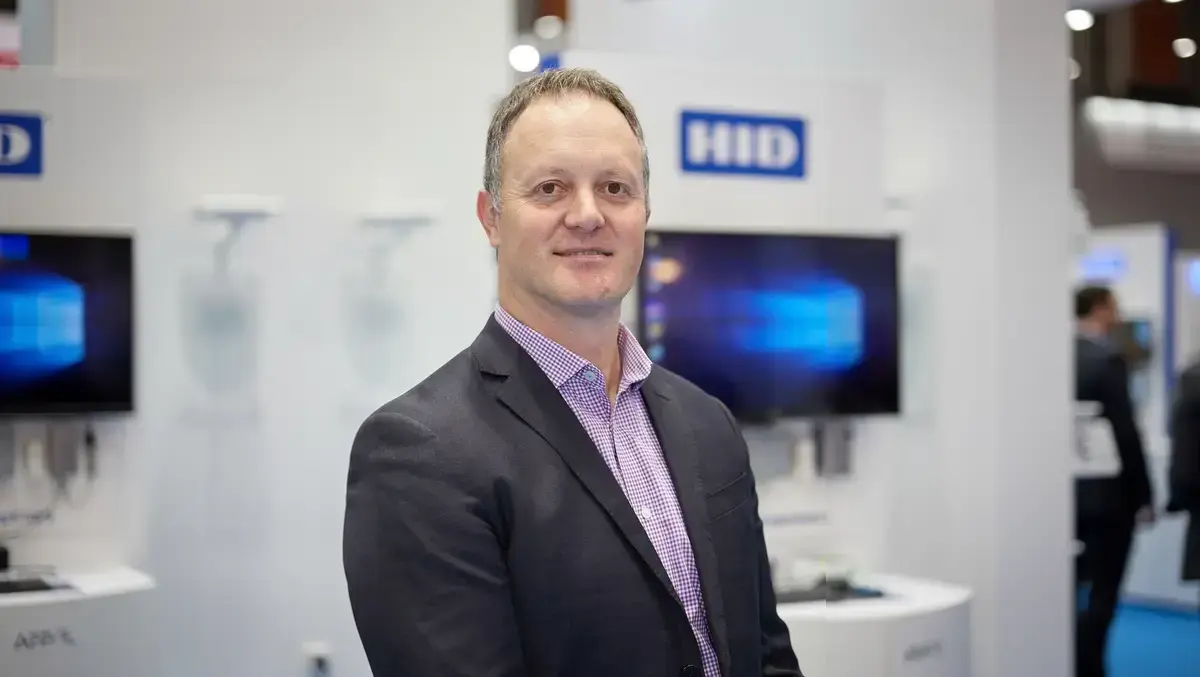
Steve Katanas, Head of ANZ, Physical Access Control Solutions at HID, said access control is no longer seen as a background function.
"For a long time, physical access control was seen as something that sat in the background, focused mainly on securing doors and buildings. That's changing. As physical and digital access points become more connected and workforce expectations continue to evolve, access control is playing a much bigger role in how organisations protect people, spaces and information. The discussion today is less about upgrading technology for its own sake, and more about creating a security foundation that can support changing business needs and future growth," Katanas said.
Access update
Among the products on show is the Signo Décor reader range, due to launch in Australia in October 2026. The readers combine mobile credential support with a flush-mounted design aimed at commercial interiors.
The range supports physical credentials as well as mobile access through Bluetooth Low Energy and NFC. It is also built on OSDP, an industry protocol for secure two-way communication between readers and control systems.
Its modular design allows the readers to be integrated into hardware beyond standard door entry systems, including intercoms, lifts, turnstiles and other access points where operators may want a common credential system.
Physical access infrastructure remains a large installed base in many organisations, and replacement cycles can stretch over years. Products that support both legacy credentials and mobile formats are increasingly positioned as a way to phase in new systems while limiting disruption.
"Organisations are increasingly managing identities across multiple sites and environments, making consistency and centralised control critical. They need security that works reliably, supports a mobile-first experience and fits naturally into the spaces people use every day. Security is still the priority, but design and user experience now also matter more than ever. Signo Décor was developed to help organisations achieve all three," Katanas said.
Also on show are the Mercury S4 I/O Modules, the latest version of the Mercury open-architecture access control platform. The platform underpins millions of access control points worldwide, and the new modules are intended to improve cyber protection and operational resilience while leaving room for future upgrades.
Digital link
Beyond building access, HID is also focusing on authentication for remote and mobile workers. Its OMNIKEY Plug Series includes compact readers designed to support smart cards, passkeys and mobile credentials stored in Apple Wallet and Google Wallet.
That places the company in a market shaped by a broader move away from passwords and towards phishing-resistant forms of login. Employers have been under pressure to secure access to cloud services, workstations and business applications for staff working across office, home and shared environments.
OMNIKEY embedded modules can also be built into connected workplace devices such as turnstiles, elevators, smart lockers, printers and other systems. The aim is to use the same underlying credential technologies across physical and digital environments rather than manage separate identity tools.
Issuance focus
HID will also demonstrate the FARGO HDP5000e card printer alongside FARGO Connect, its cloud-based credential issuance platform. Together, the products are intended to let organisations design, issue, print and manage credentials across multiple locations from a central system.
This part of the portfolio addresses a less visible but important part of identity management: how cards and passes are created and governed. For larger employers, education providers, hospitals and government bodies, the challenge often lies not only in authenticating users at the point of entry, but also in ensuring credentials are produced consistently and securely.
Biometric access
HID is also featuring its Amico biometric readers, which use facial recognition for access control. The product is being positioned for settings where operators want a higher level of identity assurance without requiring users to present a card or phone.
Biometric access systems have gained wider attention as organisations look for ways to reduce friction at entry points while maintaining tighter checks on who is admitted. Their use, however, often depends on local policy, privacy controls and the degree of user consent required in each deployment.
HID is part of Assa Abloy and says it operates in more than 100 countries with more than 4,500 employees. Its products are used by governments, hospitals, financial institutions, industrial businesses, education providers and corporate customers.