Graphics Processing Units (GPU) stories
Enterprises will be able to keep AI agents and proprietary data inside their own infrastructure under the new SUSE-NVIDIA sovereign AI stack.
European firms are gaining more locally controlled AI capacity, as the Oslo site is set to house 5 MW of liquid-cooled compute under regional jurisdiction.
About 2,100 internet-exposed monitoring hosts left AI GPU telemetry open, putting more than 12,000 GPUs and roughly USD $100 million of hardware at risk.
IT teams gain patching and compliance controls for NVIDIA's local AI systems as Tanium extends its endpoint platform beyond standard PCs.
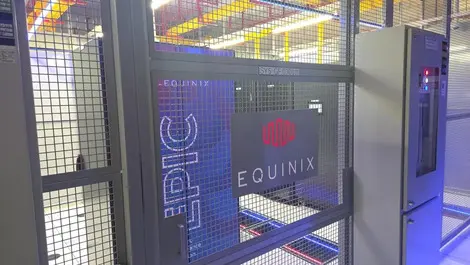
Enterprises can now test liquid-cooled AI systems in Sydney before committing to costly rollouts, as power and heat demands surge.
The tie-ups are aimed at making it easier for enterprises and cloud providers to run agentic AI in production across mixed infrastructure.
Enterprises racing to deploy AI systems can now test liquid cooling in live data centres before committing to large-scale infrastructure changes.
The blueprint could give hyperscalers and enterprises a cheaper way to run agentic AI, with flexible CPU and GPU racks and open software.
Regional AI infrastructure is set to surge, with cloud providers on course to deploy 1 gigawatt of capacity by the end of 2027.
Developers can now run Temporal workers on Cloud Run, with queues scaling capacity automatically and costs falling when work dries up.
The new chip is meant to lift Microsoft's AI services, with Maia 300 set for production deployments in 2027 and wider roll-out plans from then.
Operators can now pre-order a cooling unit that aims to reduce redesigns as GPU roadmaps shift and rack densities for AI servers keep rising.
Enterprises can now run AI agents in their own cloud or data centre without unpredictable usage charges, easing cost and data-control concerns.
Enterprises using local AI hardware will gain unified oversight of inventory, patching and compliance as Tanium plugs a longstanding management gap.
The US cloud group is deepening its Asia push, with the Navi Mumbai site set to become a major base for AI workloads from mid-2028.
Banks worried about data security and rising AI costs can now run Farsight's platform on their own systems via Ornn's GPU capacity.
Businesses could cut GPU use by up to 67% on repetitive AI workloads as Navyra's Ale reuses verified inference work instead of repeating it.
Private deployments are already running as the two firms aim to make live AI responses far quicker, targeting up to 3,000 tokens a second.
Built for enthusiasts with large graphics cards, the mid-tower starts at USD $89.99 and gives Formula V Line a first US retail foothold through Newegg.
The new range aims to help enterprises run AI inference and analytics on standard servers while adding stronger security and easier management.