NVIDIA stories
Concerns over overseas access have pushed Australian agencies towards locally controlled AI, as a US order left some users abruptly cut off.
Enterprises can now run AI agents on live PostgreSQL data with governance controls, as EDB expands its Postgres AI platform.
Backed by Amazon, Google and Microsoft, the scheme aims to speed fixes for flaws that could ripple through banks, hospitals and power grids.
Pressure on firms to secure sensitive AI workloads is driving the summit agenda as adoption of confidential computing accelerates, IDC says.
AI-generated code is outpacing enterprise review processes, prompting Qodo to add tools that flag cross-repo risks and enforce standards.
Access to advanced coding tools is becoming a bigger concern as Featherless.ai hosts Z.ai's GLM 5.2, an open-source model aimed at software teams.
Armenia's research push gets a boost as a 64-GPU supercomputer is installed in a retrofitted university building.
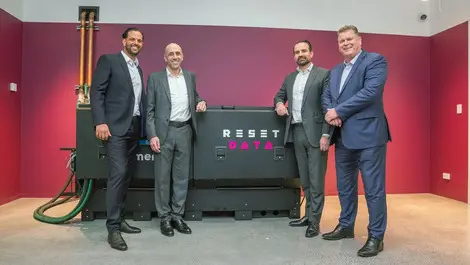
The fanless design could cut cooling bills and water use for AI data centres, while also boosting rack density for hyperscale operators.
European cloud and AI customers will gain locally built NVIDIA Vera Rubin NVL72 systems as Bull and Foxconn shift production to France and the Czech Republic.
Data centres and research labs could cram larger AI models and simulations in memory, with Dell's new rack scaling to 144 GPUs per rack.
The rack-ready system targets organisations needing denser, liquid-cooled infrastructure as AI and scientific computing demands surge.
AI chatbot firms can now sell adverts against user queries, as Taboola extends DeeperDive's monetisation system beyond publishers.
Singapore businesses can now deploy secure AI systems in private data centres, easing sovereignty concerns as demand rises across regulated sectors.
It aims to solve a key enterprise AI problem by standardising how software reads PDFs, Word files and images without losing layout or meaning.
Enterprise users will get tighter controls over AI agents as HPE adds Nvidia's Vera CPU, Agent Toolkit and confidential computing to its factory portfolio.
Security and governance tools are being added as enterprises push agentic AI from pilots into live production systems.
The trial could help public safety and government users keep AI processing in Canada while improving latency for distributed workloads.
The new server lets security teams feed Claude and Codex with case history and triage logic, reducing manual alert handling.
The pact could keep more AI data and computing in Canada as enterprises and public bodies seek domestically governed infrastructure for sensitive workloads.
The launch targets firms struggling to keep AI projects fed with clean, unified data as fragmented storage can leave GPUs idle.