

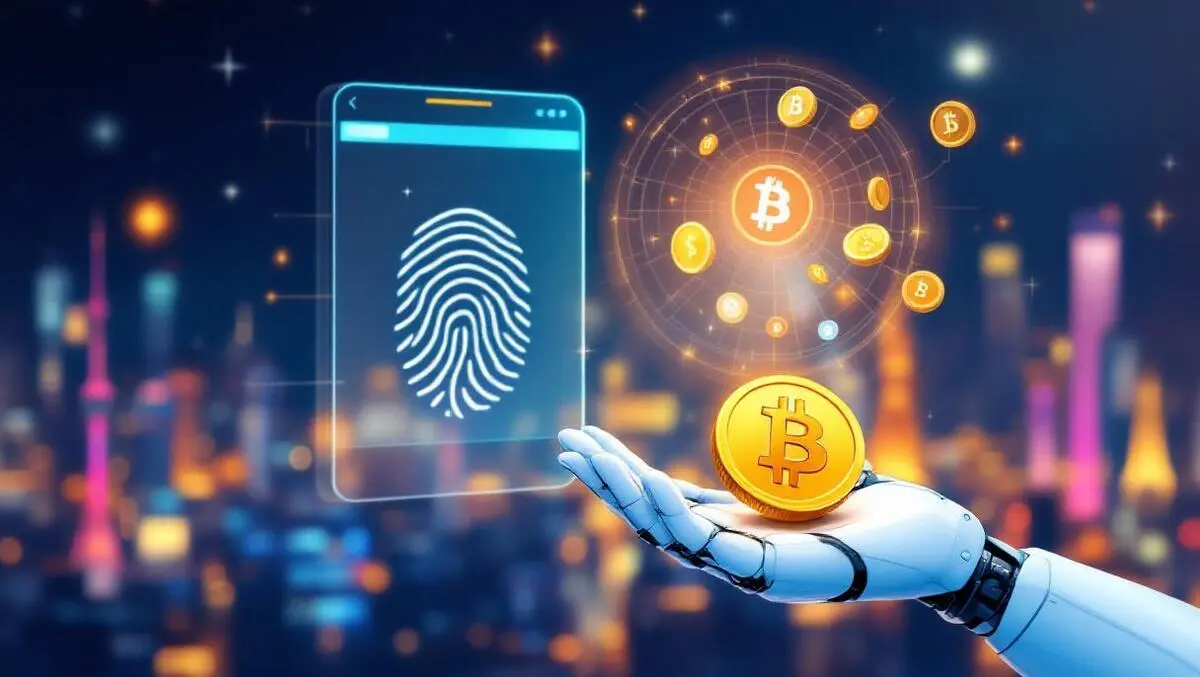
AI agents, biometrics & stablecoins to reshape payments by 2026
Wed, 12th Nov 2025
Significant changes are projected for the global payments sector by 2026 as several technologies gain maturity within specific markets, according to new industry analysis. Developments in agentic payments, stablecoins, next-generation biometrics and improved payment standardisation are expected to impact both business-to-business and consumer-facing payment practices, though adoption will be uneven.
Agentic payments
Agentic payments, which allow artificial intelligence agents to interact with financial systems on behalf of users, are forecast to make their first substantive appearance in 2026. However, these payments will initially remain experimental, particularly for consumer transactions, due to ongoing issues around technical limitations and consumer trust. Widespread consumer adoption is not expected until 2027 as further work is done to improve consent management, authentication, and dispute resolution processes.
In business-to-business transactions, AI agents are forecast to play a much more substantial role. By 2026, it is expected that AI agents will be involved in around one-third of B2B payment workflows. The complexity of B2B payments often resides in processes such as invoicing and accounts payable, making them well suited for automation. Security concerns remain a consideration, but vendors are already launching solutions in this space.
"Agentic and stablecoin payments are set to reshape global payment ecosystems by 2026, introducing diverse standards, protocols, business models, and blockchains that will drive significant fragmentation. In APAC, agentic payments are emerging as the next frontier, with B2B adoption expected to scale faster than B2C. While stablecoins remain a hot topic in 2025, retail applications and B2C use cases are unlikely to gain traction in 2026; instead, their growth will centre on B2B cross-border transactions and corporate treasury operations. Beyond stablecoins, banks are exploring blockchain-based alternatives such as deposit tokens and CBDCs. Local currency-pegged stablecoins like JPY, SGD, and HKD are unlikely to scale, as USD continues to dominate APAC trade. Meanwhile, China's RMB is gaining traction regionally, though the country maintains its stance against private cryptocurrencies and prioritises CBDC development," said Meng Liu, Senior Analyst, Forrester.
Stablecoin prospects
Stablecoins continue to attract attention but are not projected to develop into a mainstream retail payment method in the near future. Lack of scalable use cases, combined with technical, trust, and regulatory issues, are limiting retail and B2C adoption. Instead, stablecoins are expected to remain primarily relevant in cryptocurrency trading and certain B2B scenarios, such as cross-border corporate transactions and treasury operations. In regions like Asia Pacific, most locally launched stablecoins are forecast to fail as they face regulatory hurdles, insufficient utility, and competition from alternatives including central bank digital currencies and tokenised deposits.
Biometrics and standardisation
The industry is also set to see advances in payment security, particularly through next-generation biometric authentication. Such technologies are expected to play a key role in combating threats like deepfakes, as payment systems continue to adapt to evolving risks. The global uptake of account-to-account payments is anticipated to be driven by improved standardisation, particularly through greater use of QR codes, which could simplify payments across different regions and providers.
Payment leaders are advised to assess their technology strategies in anticipation of these shifts. Building flexible infrastructures that can accommodate agentic commerce, new payment rails, and biometric-enhanced security requirements is described as crucial for keeping pace with the evolving ecosystem.
"In 2026, the payments industry will undergo fundamental transformation as AI agents reshape B2B workflows, QR code standardisation drives account-to-account adoption globally, and biometric authentication evolves to combat deepfakes. Payment leaders must proactively evaluate these emerging technologies now and build flexible systems that can adapt to agentic commerce, account-to-account rails, and enhanced authentication requirements," said Lily Varon.