

Cicada appoints venture growth experts amid tax concern
Wed, 21st Oct 2026 (Today)
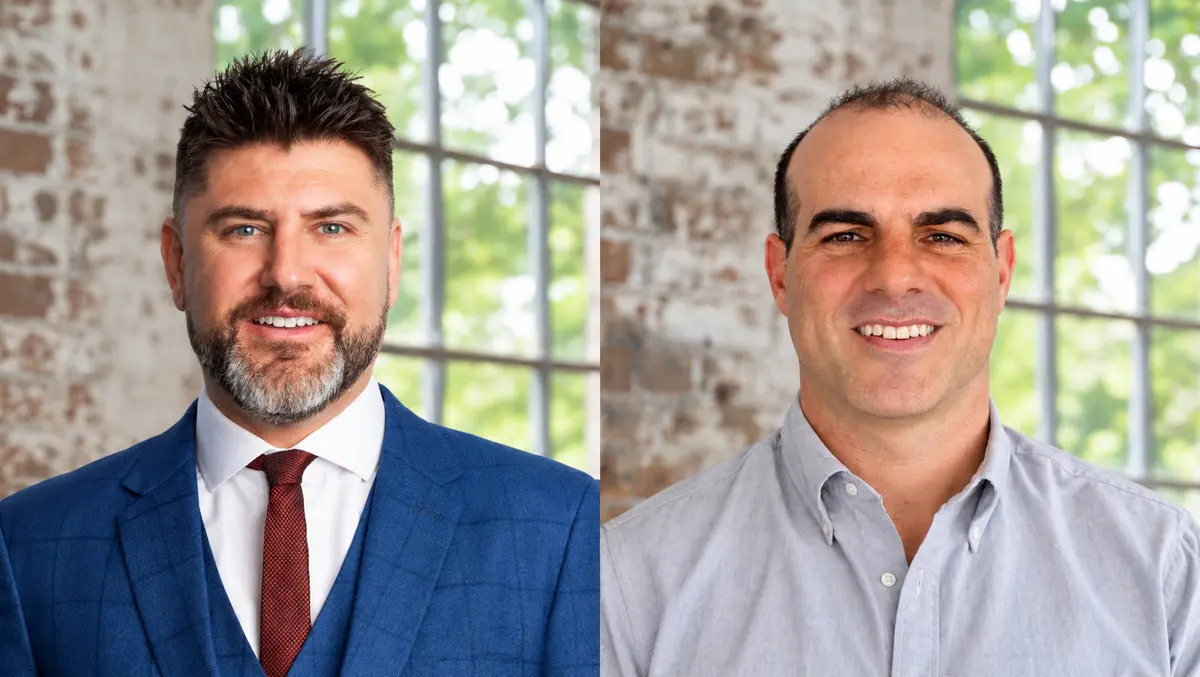
Cicada Innovations has appointed Professor Rob Gorkin and Sam Bruce as Venture Growth Experts, expanding the incubator's support for deep tech founders in biomedtech, energy and critical industries.
The pair will work with ventures in Cicada's incubator as they move from research and technical development to commercial growth. Their appointments come as the organisation intensifies its argument against proposed changes to the Research and Development Tax Incentive, which it says could weaken support for deep tech companies that take longer to generate revenue.
Professor Gorkin joins in Sydney as Venture Growth Expert, BioMedtech. Bruce, based in Victoria, becomes Venture Growth Expert, Energy and Critical Industries.
Both bring experience in turning research into businesses, though from different sectors. They will challenge, coach and connect founders as companies navigate product design, regulation, manufacturing, funding and market entry.
Liza Noonan, Chief Executive Officer of Cicada, said the appointments reflected continued momentum in the sector.
"Australian founders continue to tackle hard, important problems. Universities and industry continue to produce exceptional science and technology. And experienced people like Rob and Sam continue to choose to put their expertise behind the companies that can commercialise that work and take it to the world," Noonan said.
Gorkin's background spans pharmaceuticals, medical devices, digital health and health systems innovation, as well as advanced manufacturing, robotics and artificial intelligence. He co-founded medtech company Eudaemon Technologies and has served on its board in leadership roles including Chief Executive Officer and Executive Director, Innovation. He is now a Non-Executive Director.
His recent roles also include Director positions at Western Sydney University's Translational Health Research Institute and SPHERE, a research translation centre. He has also worked with international philanthropic funders including the Gates Foundation.
Gorkin outlined the commercial hurdles facing science-led ventures.
"I know firsthand what it takes to move an idea out of a lab and build a company around it. The science is only one part of the challenge. You have to make decisions about product, customers, regulation, manufacturing, capital, people, and critically how to grow and deliver value," Gorkin said.
He added that starting a company is not the same as scaling one.
"Australia produces world-leading research, and we're good at starting companies. Scaling is where we often fall short. Cicada understands we need more catalysts to improve the ecosystem, and I'm here to help it lead," Gorkin said.
Bruce brings a background in commercialisation and project development across the energy and industrial sectors. His career has included roles at EY, Fortescue Future Industries and Pollination, as well as five years at CSIRO.
At CSIRO, he worked on research-industry partnerships and incubation programs, and helped develop strategies including Australia's National Hydrogen Roadmap and Critical Energy Minerals Roadmap. That experience will support founders in sectors where commercial pathways are shaped by long development cycles, industrial customers and project finance requirements.
"I've spent much of my career looking at how to develop and commercialise the technologies that Australia will need to build a more resilient and competitive economy. Many of those capabilities start with the kind of founders Cicada supports," Bruce said.
"Working directly with those founders and helping them transition their world-leading IP into successful businesses is something I am really passionate about. These are difficult companies to build, but they can create significant value for Australia in a rapidly changing global economy," Bruce said.
Tax concern
The appointments also coincide with Cicada's public concern over mooted Budget changes to the RDTI. One measure under discussion is a ten-year company age limit on access to the refundable offset.
Cicada argues that such a threshold does not fit the economics of deep tech businesses, many of which spend years in research, development and testing before generating meaningful commercial income. In sectors such as medtech, energy systems and advanced industrial technology, product development can extend well beyond a decade because of technical risk, regulatory demands and customer adoption cycles.
Noonan said the proposed limit could exclude companies when they still face their largest research costs.
"When an Australian deep tech company succeeds, the return goes well beyond that company. It creates IP, highly skilled jobs, new industries, sovereign capability and solutions to problems that matter," Noonan said.
"In deep tech, company age isn't a proxy for commercial maturity. Many of these companies are doing their most capital-intensive R&D after year ten, while still pre-revenue. The RDTI needs to reflect that reality if we want to keep the value they create here," Noonan said.
Wider pipeline
The new hires form part of a broader expansion of Cicada's support model for early and growth-stage deep tech ventures. That includes Cicada Assemble, a program designed to help science-led ventures and technical founders move from validated invention to commercial readiness.
The organisation sees this stage as a market gap between early commercialisation support and larger accelerators, grant schemes and investment rounds. For founders emerging from universities and research institutes, that transition often determines whether intellectual property remains in Australia or is developed elsewhere.
Noonan said the flow of potential ventures was increasing, but support systems needed to keep pace.
"The pipeline is there and it's growing," Noonan said. "Our job is to put the right experience, networks, capital and opportunities around these founders so more of them succeed. Australia has the capability. We need to make sure the systems around it keep pace."