

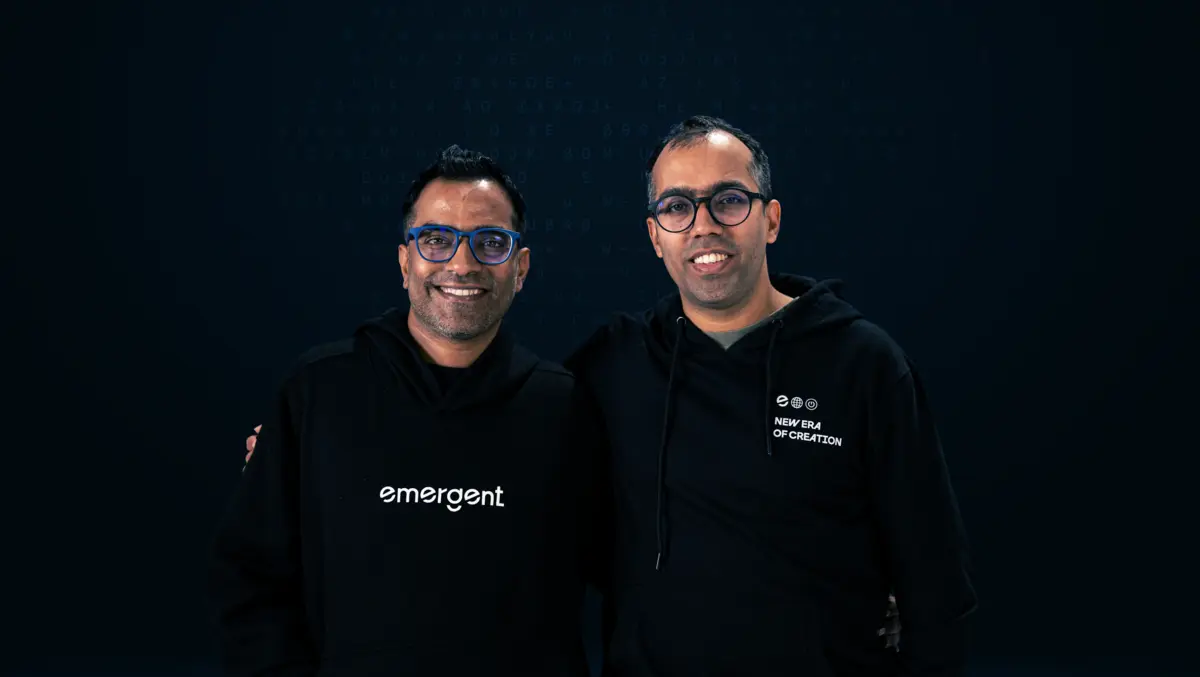
Emergent raises USD $130 million in AI app platform round
Thu, 16th Jul 2026
Emergent has raised USD $130 million in a Series C financing round, valuing the AI app-building platform at USD $1.5 billion.
Creaegis led the round, while Claypond and Sentinel Global co-led, with participation from Khosla Ventures, SoftBank Vision Fund 2, Lightspeed and Y Combinator.
The financing comes a year after Emergent's public launch and follows rapid growth in users building web and mobile applications on its platform. More than 12 million apps have been built on the service over the past year.
Its software is aimed at small business owners and solo entrepreneurs who want to create applications without a technical background. In Australia, the platform has recorded more than 106,000 sign-ups and 4,370 deployed applications.
User base
Emergent says 70% of its users have no prior coding experience. Customers are using the platform to create tools including CRMs, ERPs, marketplaces, mobile apps, internal systems and customer-facing products.
The company says demand is being driven by smaller firms that need custom software but lack the budget or access to traditional development teams. Some users are replacing off-the-shelf software services, while others are using the platform to launch entirely new businesses.
Among the examples cited was a founder in California who moved a consumer app onto Emergent and reported a fivefold increase in new business enquiries, with monthly revenue nearing USD $60,000 and users in more than 170 countries.
In Germany, a business owner used the platform to build Motona Market, a system for car sales, fleet management and mechanic services. According to Emergent, the user avoided nearly USD $20,000 in custom development costs and now has hundreds of active users.
In India, another founder built a partner portal for nutritionists alongside an ERP system covering inventory, manufacturing, finance, tax and compliance. Emergent says the system automated referrals and commissions while giving partners real-time visibility into orders and production.
The company also pointed to a small business owner in South Florida who rebuilt the web and mobile presence for a car detailing service on the platform. Emergent says the site now attracts about 50 high-intent visitors a day and has contributed to a 35% increase in leads.
Founder comments
Emergent framed the financing around a broader shift in software creation towards non-technical users within smaller businesses.
"The real impact of the AI revolution will be a complete democratisation of who gets to build what software, where they get to build it, and how much it costs," said Mukund Jha, Co-Founder and Chief Executive Officer of Emergent.
"It's about making software development accessible to the people closest to the problem, regardless of their technical knowledge. With a platform like Emergent, the people who have great ideas and deep domain expertise can now build and run the software their business needs to succeed at a fraction of the cost."
Jha said the company designed the product for founders and small business owners without technical training.
"We built Emergent for the non-technical entrepreneur and the small business owner, with 70% of our users having no prior coding experience," Jha said.
"We give these users a new path beyond generic SaaS, slow and expensive dev shops, lightweight prototype tools, or waiting for technical talent they may never have access to."
Investor view
The round drew backing from existing and new investors betting that small firms will spend more on tailored software rather than rely solely on standard software packages.
"Small businesses today have a historic moment to build, automate, and operate using autonomous platforms and address their disadvantages in the previous era," said Prakash Parthasarathy of Creaegis.
"Emergent is enabling every entrepreneur and business to embrace this change with production-grade software and automation."
Emergent says businesses are using its platform to test ideas, digitise operations and build internal tools without dedicated engineering teams. Its backers include Creaegis, Claypond, Khosla Ventures, SoftBank Vision Fund 2, Lightspeed, Sentinel Global, Y Combinator, Prosus, Together and Google's AI Futures Fund.