


Never heard of OVHcloud? That's about to change as the French cloud computing and web services company launches its first Local Zone in the Asia-Pacific region. While it has selected New Zealand for its initial presence, now domiciled in Datacentre220's Auckland facilities, the move strengthens OVHcloud's broader value proposition for its clients everywhere. That's because business is global on the one hand. On the other, resilience and availability improve across the estate as interconnected data centres build out.
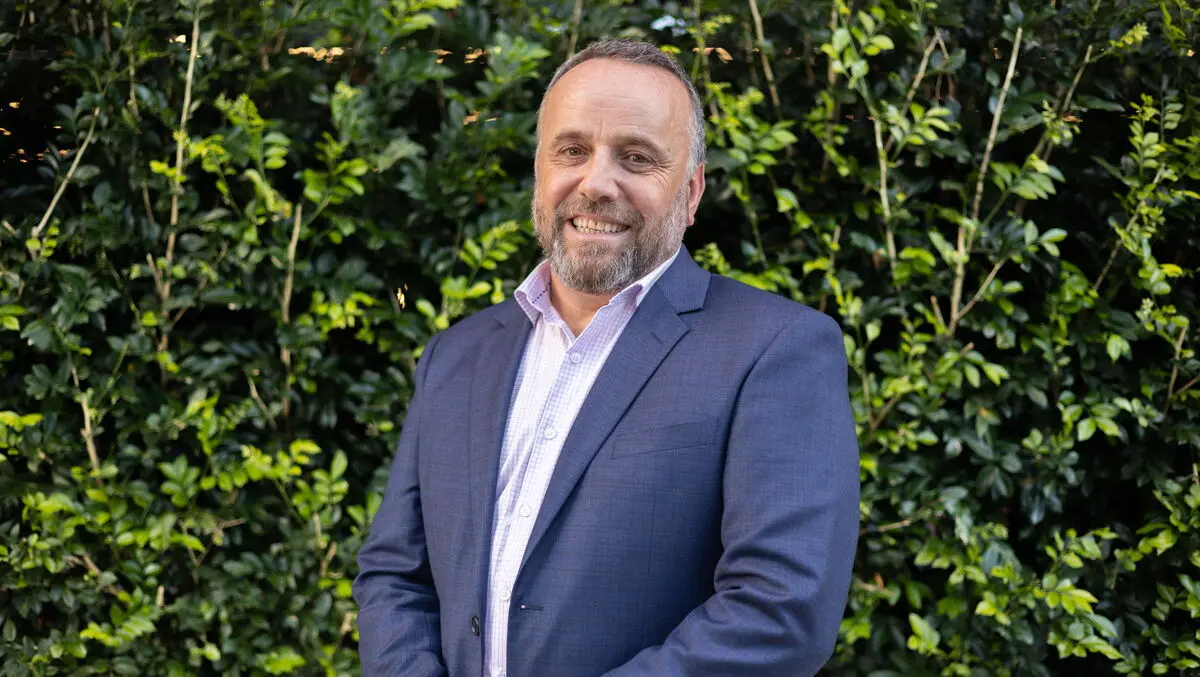
OVHcloud executive Terry Maiolo said the new region is very much open for business. "We already have live workloads with multiple customers," he confirmed.
The other issue on which he didn't hesitate to agree (with a disarming laugh), was the assertion that even old hands in the industry may not recognise the OVHcloud name, so it needs plenty of introduction. Getting its start back in 1999, OVHcloud is a French company now headquartered in Roubaix. It's a billion-dollar-plus public organisation, listed on Euronext Paris, and runs close to 50 data centres on 4 continents. Safe to say that as the company enters the Pacific, it's likely you'll be hearing a lot more about it, particularly as partners like colocation provider Datacentre220 are well connected to the local channel.
The Auckland Local Zone allows local access to alternative public cloud services including compute, block storage, and object storage via OpenStack. The facility holds ISO/IEC 27001 certification for information security management, and targets industries including finance, banking, healthcare, government, and consulting, the zone provides a critical solution for keeping data within geographical boundaries dictated by local regulations or internal security policies.
Indeed, Datacentre220 CEO Ross Delaney said the news of an alternative infrastructure provider has been welcomed. "When the announcement came out, New Zealand Internet Exchange and one of the big Australian exchanges, picked up on it and they are excited, because it brings another peering option within their network." More resilience is always better in a connected world.
Which is all well and good, but why should customers choose OVHcloud? Yes, there are the obvious reasons, such as the resilience that comes with multicloud for backups, and now data sovereignty with workloads right here in Auckland serving the broader APAC region. And, of course, an air gap from USA-based hyperscalers, read into that what you will.
But Maiolo immediately reached for two things that are increasingly relevant to corporate (and small to medium) New Zealand businesses: "First of all, our supply chain. We're the only large hosting provider that builds its own servers, and that adds a unique level of sovereignty because no one else touches our servers. We build them. We know what's in them. We distribute those servers in their racks out to all of the data centres."
There's more to that, too. By vertically integrating, Maiolo explained, OVHcloud is one of the coolest of the data centre kids. "We do our cooling direct to the chip, and the water is in a closed loop so it doesn't evaporate. We actually don't run air conditioning and as a result, we have superior power and consumption figures." Maiolo also said OVHcloud offers higher rack density, again, as a result of its vertical integration.
Whether you're green or not, this directly addresses one of the major issues of the AI age: electricity cost and availability. "Governments are pursuing a power usage efficiency of 1.3, and it's something we've been below [a Google check reveals 1.24]," said Maiolo. By comparison, the global industry average is around 1.5 to 1.6.
"So that side of it is less power, less water, less space, more control over our supply chain, less cost."
Sound good? The second aspect which may well prove a knockout point: "Okay, so we do bring to the market a very, very, quite superior price point."
Across APAC, companies and people have an affinity for doing business with a keener eye on the environment. We also like nice things that are also affordable. More options in what occasionally appears to be a two or three horse race in the cloud hyperscale world means more competition, better services, and, crucially, affordability even as many organisations across the country experience cloud cost blowouts as a feature, rather than a bug.