

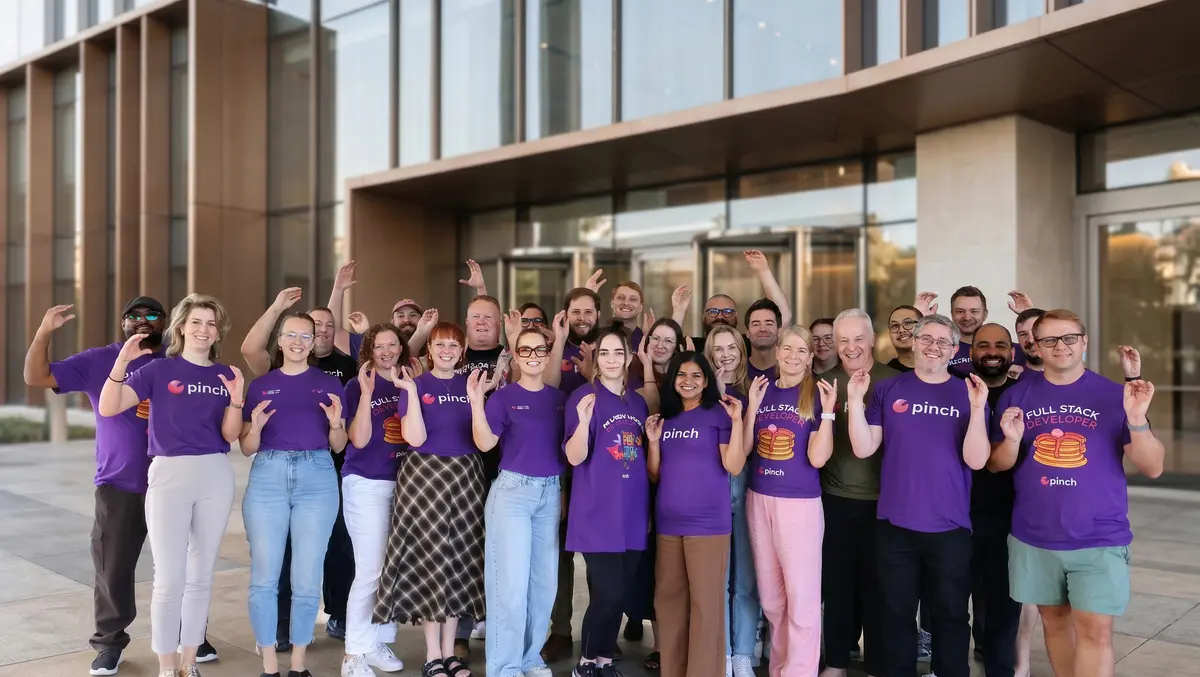
Pinch Payments opens national hackathon with AUD $50K
Thu, 16th Jul 2026%201.webp)
Pinch Payments has opened applications for a national hackathon with a top cash prize of AUD $50,000. The program invites Australian developers and founders to build payment technology using its API.
The event, called Pinch Me, I Want $50K, is open to developers, designers, founders and product specialists. Participants can enter alone or in teams, and those without a team will be matched with others before the build phase begins.
Unlike many hackathons run by large companies, the competition does not set a fixed problem for entrants to solve. Teams are free to choose their own idea, provided the product runs on the Pinch Payments API.
Entrants will work with the same infrastructure used by the company's merchant base rather than a simulated test environment. Pinch Payments processes direct debit, card and payment plan collections for more than 4,000 Australian businesses.
Ben Cull, co-founder of Pinch Payments, said the format is designed to produce working products rather than concepts.
"We didn't want another hackathon where people walk away with a slide deck and a mockup," Cull said.
"Every team gets sandbox access to the same card and direct debit processing, billing automation and embedded finance tools our merchants use every day. What comes out the other end is a working product built on production-grade rails, not a proof of concept that falls over the moment it meets a real transaction."
The build period will run for one week after applications close. Finalists will then pitch their products to a judging panel of fintech founders, operators and investors.
Prize structure
The winning team will receive AUD $50,000 in cash. The runner-up will receive AUD $25,000 in free Pinch payment processing.
Judging is expected to focus on technical execution, commercial viability and the originality of the problem each team chooses to address. Entry is free, and participants may use AI coding tools during the sprint, including Claude, ChatGPT, Cursor, Replit and GitHub Copilot.
Paul Allen, co-founder of Pinch Payments, said payment software offers a rare opportunity for small teams to build useful products quickly.
"Payments is one of the few parts of a tech stack where a small team can genuinely ship something that matters in a week, because the hard infrastructure problems are already solved," Allen said.
"We're handing developers the same rails that already move money for more than 4,000 Australian businesses, and asking them what they'd build if compliance, settlement and reconciliation weren't the bottleneck. That's a very different starting point to most hackathons."
Pinch Payments will run in-person hubs at Tank Stream Labs in Sydney and Melbourne, while a Brisbane location has yet to be confirmed. It will also offer a remote participation track with the same mentoring, documentation and support resources as the in-person groups.
Places at the physical hubs are capped, with early applicants receiving priority.
Broader strategy
The hackathon also reflects a broader push by Pinch Payments to expand use of its infrastructure among software developers and product teams. Alongside its core payments and billing services, the company operates Glassbox, a platform that helps software providers embed payment processing into their products.
Cull linked the competition to that strategy.
"We built Glassbox because we kept seeing software companies get stuck bolting payments onto their product as an afterthought," he said. "This hackathon is really an extension of that thinking. We want to see what happens when smart builders get proper payment infrastructure from day one instead of month eighteen."
Founded in 2017 by Cull and Allen, the business has built integrations with accounting platforms including Xero, QuickBooks and MYOB. Thousands of Australian businesses use its software to manage collections through direct debit, credit cards and payment plans.
Allen said the company sees the competition as a way to surface ideas from people building products close to customer needs.
"Our merchant base has taught us more about what businesses actually need from payments than any product roadmap workshop ever could," he said.
"Opening that infrastructure up to a hackathon is our way of finding the next problem worth solving, straight from the people who'll be building on top of us."