

.webp)
Arcitecta has launched Mediaflux Connect 365 for universities and research institutions using Microsoft 365. The product targets organisations facing tighter storage limits under Microsoft 365 Education.
The software works with Microsoft OneDrive, SharePoint and Teams, helping institutions identify, categorise and move data while keeping it searchable and governed. It is aimed at long-term data management as universities reassess what they store in Microsoft's cloud services.
The launch comes as higher education institutions deal with Microsoft's shift in Microsoft 365 Education from unlimited cloud storage to a pooled allocation. Under the revised model, tenants receive 100 terabytes of free storage plus 50GB to 100GB per licensed user. The change could sharply raise costs for universities with very large archives of research and institutional data.
For organisations holding hundreds of terabytes or several petabytes, the financial impact could be substantial. Arcitecta estimates additional storage could cost about USD $360,000 per petabyte each year, increasing pressure on institutions that have relied on Microsoft 365 as a long-term repository.
Universities are left with limited options: pay for more storage, reduce data volumes, or move material into lower-cost on-premises, cloud or hybrid environments. The issue is becoming more immediate as institutions reach licence renewal points and adapt to the new limits.
Storage pressure
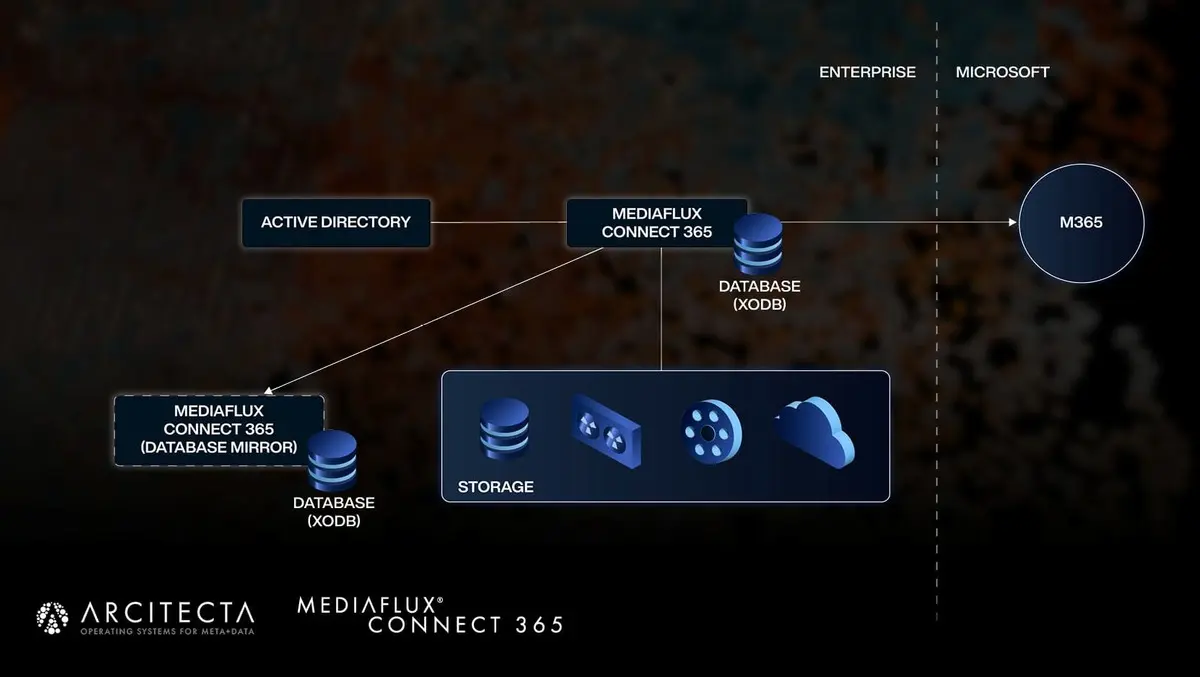
Mediaflux Connect 365 analyses data stored in Microsoft 365 so institutions can decide what should stay in place, what should be moved and what can be deleted. Arcitecta says the process can also help universities begin Microsoft's data egress procedures, which it describes as lengthy and controlled by Microsoft.
The software is also intended to provide a consolidated view of data across OneDrive, SharePoint and Teams. Arcitecta argues many of these stores are not actively managed today, making it harder for organisations to understand what information they hold, detect sensitive material such as personally identifiable information, and confirm backup policies.
Another element of the product is metadata management. Arcitecta says richer metadata can make large volumes of stored information easier to find and understand, including details on how and where the data was generated.
The service is positioned as storage-agnostic, with support for on-premises flash, object and tape systems as well as cloud storage. That flexibility may appeal to universities balancing cost with data sovereignty requirements and internal governance rules.
Jason Lohrey, Chief Executive Officer and founder of Arcitecta, outlined the company's case for the product.
"Universities shouldn't have to choose between controlling costs and preserving decades of valuable institutional and research data," Lohrey said. "Mediaflux Connect 365 gives institutions a practical, cost-effective way to move data into an actively managed environment built for long-term management, governance and innovation. As universities prepare for Microsoft's new pooled storage model, we're helping them solve today's storage challenges while building a stronger, more resilient future-ready data strategy."
Broader response
Arcitecta is also expanding its technology partner ecosystem to support universities responding to Microsoft's storage changes in different regions. The company says a combination of third-party storage and its software could help institutions meet local governance and data sovereignty requirements while reducing reliance on Microsoft 365 for long-term retention.
Industry analysts have also pointed to a broader shift in how organisations use collaboration platforms. Microsoft's services remain central to day-to-day productivity, but some institutions are reassessing whether they should continue to serve as the primary home for years of accumulated research, administrative and compliance data.
Jerome Wendt, Chief Executive Officer and Principal Analyst at DCIG, said the policy shift is forcing organisations to revisit long-standing assumptions.
"Microsoft optimizes its OneDrive and SharePoint collaboration platforms for productivity, not as long-term repositories for institutional data," Wendt said. "Yet as storage volumes continue to grow and with Microsoft introducing new storage costs, organizations need to rethink how they retain data in OneDrive and SharePoint. Active data management that can intelligently tier data, improve governance and metadata, and preserve accessibility while controlling costs can help address these two challenges. Institutions that adopt this approach will better position themselves to control storage costs, strengthen governance and prepare their data for analytics and AI."
The launch reflects a growing market for data governance and storage lifecycle management in higher education, where institutions must preserve research outputs and records over long periods while controlling budgets. For universities with large Microsoft 365 estates, the storage rule changes are turning that need into an operational decision with direct budget consequences.
Mediaflux Connect 365 is available immediately.