

Renew Risk launches US solar storm catastrophe model
Mon, 11th May 2026
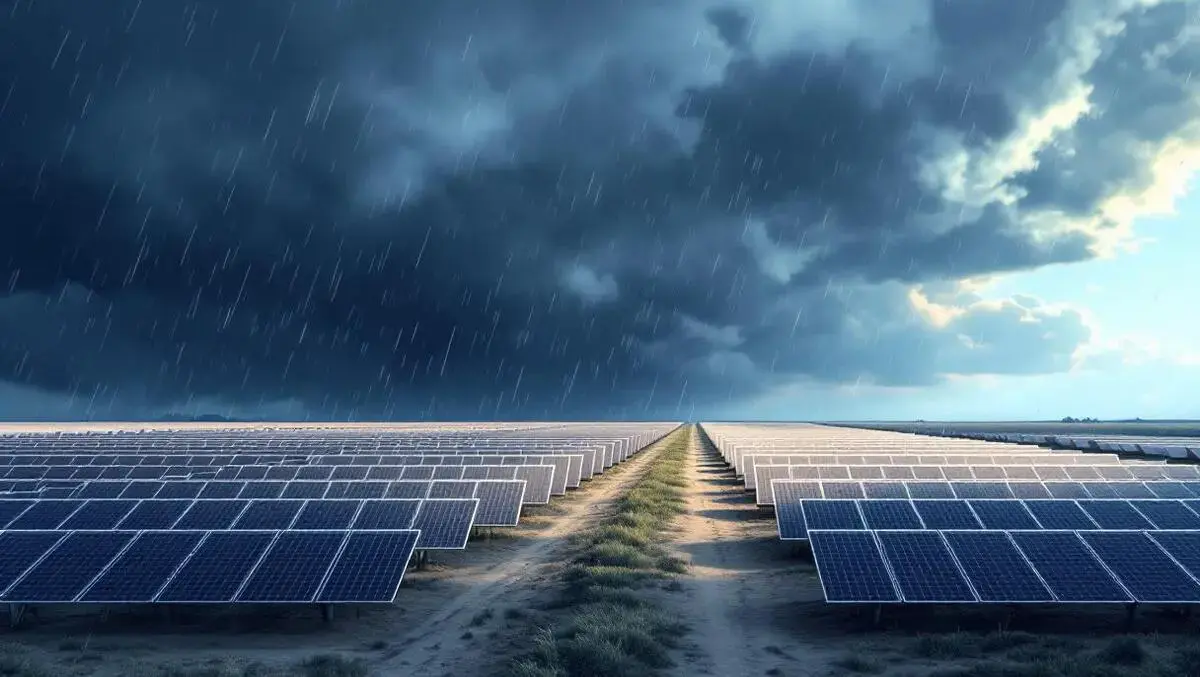
Renew Risk has launched a catastrophe model for severe convective storms affecting US solar farms, which it describes as the first designed specifically for that risk in the United States.
The launch comes as utility-scale solar development expands across the country and insurers face growing exposure to weather-related losses. The market is on track to add 86 GW of new utility-scale solar capacity in 2026, according to figures cited by Renew Risk.
Severe convective storms have become a major concern for insurers covering US renewable energy assets, particularly in regions exposed to hail, tornadoes and straight-line winds. Figures cited by Renew Risk show these storms accounted for 51% of natural catastrophe-related losses in 2025, totalling USD $46 billion.
For solar farms, hail has emerged as a particularly costly source of damage, accounting for 6% of loss incidents but 73% of financial losses at US solar sites, according to the company.
The model is aimed at insurers, reinsurers and brokers seeking a more detailed assessment of how storm risks affect individual solar assets. It focuses on site-level engineering features, including glass thickness, stow angle and system reliability, alongside broader exposure measures such as total insured value and business interruption.
That approach reflects a wider shift in insurance markets towards more granular analysis of renewable infrastructure, where losses can vary sharply between sites exposed to the same weather event. Design choices and mitigation systems can materially alter outcomes.
Renew Risk pointed to a severe hailstorm in Texas in spring 2024 that destroyed thousands of panels at the 35 MW Fighting Jays Solar Farm. Two solar farms 15km away, with weather-tracking systems capable of moving panels into a vertical stow position before the storm, suffered no direct hail-related damage, while a third nearby site recorded only minimal damage because of a motor issue in its hail mitigation system.
Storm exposure
The new model combines analysis of hail, tornadoes and straight-line wind in a single framework. It also uses machine learning to address gaps in historical claims data, particularly in remote areas where many solar farms are built.
Renew Risk developed that part of the model with Vāyuh, an artificial intelligence-based modelling firm. Its exposure database, updated monthly, feeds into calculations of asset values and business interruption losses.
Dr Joshua Macabuag, Chief Executive Officer of Renew Risk, said: "Historically, risk management has focused on rarer but catastrophic events such as hurricanes and earthquakes. However, high-frequency, highly localised severe convective storms are now the primary loss driver in the US, accounting for 51% of natural catastrophe-related losses in 2025, totalling $46bn.
"For the solar market, traditional models fail to capture how this complex peril interacts with varied engineering systems. Our next generation US Solar Model gives our clients the competitive edge to grow their portfolios profitably and with confidence."
Broader expansion
The launch adds to Renew Risk's expansion into catastrophe models for renewable energy assets. The business recently released windstorm models for offshore wind farms in the UK, Ireland and across European coastlines, building on earlier products for markets including Taiwan, Japan and the US.
Founded in 2021, the company has raised GBP £4.7 million in seed funding at a GBP £16 million valuation. It says it can develop new catastrophe models in around nine months, compared with timelines of more than three years for more established providers.
Renew Risk said its models have been developed and validated with early market users to reflect underwriting and risk management requirements. It works with insurers and other market participants involved in renewable energy portfolios.
David Vicary, Head of Solar at Renew Risk, said: "By taking an asset-first approach to model development and partnering with best-in-class organisations, we have developed a technically robust, highly asset-specific view of SCS risk that captures the unique risk drivers of utility-scale solar farms."