


xReality hits profit as Operator XR drives global push
Thu, 26th Feb 2026%201.webp)
xReality Group has reported operational profitability after posting its strongest half-year result, as revenue climbed and earnings rose sharply on demand for its Operator XR virtual and extended reality training platform.
The Australian defence and security training provider recorded total revenue of $10.4 million for the six months to 31 December 2025, up 41% on the prior corresponding period. EBITDA reached $2.6 million, up 190%.
Operator XR and associated grant income made up 63% of group revenue, including recognised Operator XR revenue of $4.4 million and $2.1 million in related grants. Net cashflow from operations was $3.1 million.
Recurring income
Annual Recurring Revenue rose to $6.2 million, driven by multi-year agreements. Deferred revenue stood at $12.5 million, described as cash received in advance, with $6 million recorded in current liabilities.
Unrecognised revenue from Operator XR sales to date totalled $11.5 million. Most Operator XR revenue is recognised monthly over the term of each contract.
The qualified sales pipeline reached $63 million, up 107% year-to-date. New sales total contract value for the half-year was $7.8 million.
Customer growth
The Operator XR customer base expanded to 89 agencies worldwide, representing 31% year-to-date growth. Customers included US federal agencies, state and city police, sheriff departments, and defence organisations.
After the reporting period, Operator XR added 11 more customers, taking the total to 100. All were US-based law enforcement agencies except one in Japan.
Asia-Pacific expansion also included what the company described as its first commercial sale into Japan through a regional distribution partner. This February, Operator XR received a purchase order from its primary Asia-Pacific distributor for an OP-2 system for a Japanese government agency.
Product rollout
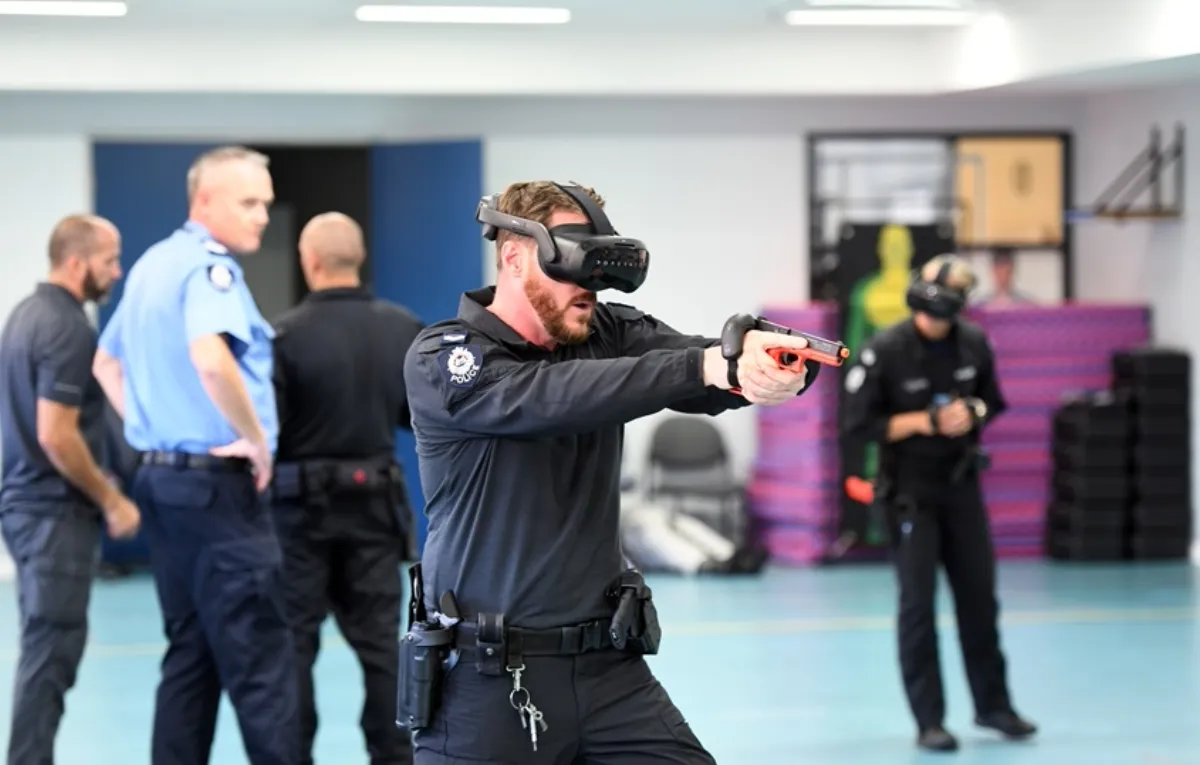
Operator XR provides immersive training scenarios for defence and security teams, using virtual reality and mixed reality. The platform also includes AI-enabled training systems.
The OP-2 platform release formed part of the company's product push during the half. It also launched a Counter-UAS simulation product, extending the platform into priority defence and security applications.
Early engagement with European stakeholders for the Counter-UAS product is supporting future pipeline growth.
Cost base
xReality Group attributed the EBITDA uplift mainly to higher recognised Operator XR revenue. Expenses across its entertainment facilities remained stable over the period.
During the half, it increased sales and customer excellence staff in the US, stepped up marketing activity, and expanded order fulfilment capacity by moving into a larger manufacturing and logistics facility.
Strategic shift
xReality Group continues to reshape its portfolio around Operator XR. Management has been reviewing its legacy entertainment operations, including iFLY and FREAK Entertainment, as part of a strategic transformation that began in FY25.
Entertainment delivered a stable contribution to group revenue in the half, primarily from iFLY operations. The company expects to fully exit FREAK Entertainment by the end of FY2026, while corporate advisers remain appointed to progress the review.
Since the reporting date, xReality Group has reduced its debt facility with Causeway by $500,000, funded from operational cash flows.
XRG's transformation to a scalable, software-driven technology platform advances its strategic goal of becoming a global leader in mission-critical simulation and immersive training solutions, laying the groundwork for long-term growth and profitability.